Washington seized a president. Now comes the part it has no plan for
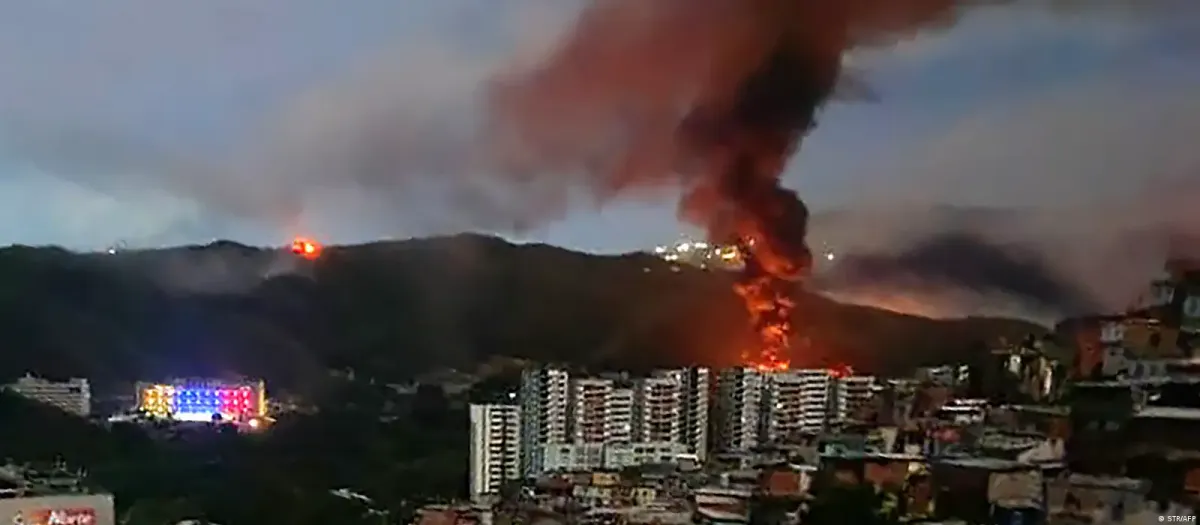
Before most of Caracas had woken on Saturday, American aircraft crossed into a sovereign capital, lifted a sitting head of state from his home and were gone by first light. By Monday, Nicolás Maduro and his wife, Cilia Flores, stood in a Manhattan courtroom and pleaded not guilty to narco-terrorism charges. In the space of a weekend the United States had done something the Western Hemisphere has not witnessed in a generation. It did not bomb a government it disliked or arm its rivals. It reached in and took away the man at the top.
On its own narrow terms, the operation was a clean success. Brookings described it without ceremony as a special operation to exfiltrate the Venezuelan leader, flown north within hours of capture. Washington says it lost no one; Havana says it buried thirty-two of its citizens, killed, in its telling, while serving an ally. That asymmetry — a flawless American extraction set against a quiet Cuban funeral — describes the balance of force in this neighbourhood more honestly than any communiqué.
None of it came from nowhere. For four months the Caribbean had been a theatre of escalation: American strikes on vessels Washington called drug-running boats, the seizure of Venezuelan oil tankers, a naval build-up tracked through the autumn. The capture of Maduro was the culmination of that pressure, not a break from it — which is why the administration could present an act of startling audacity as merely the next turn of a screw it had been tightening since September.
And the speed is exactly the problem. Removing a president is the easy verb. The hard one is to govern.
The state Maduro ran did not collapse when he was lifted out of it. Within forty-eight hours his vice-president, Delcy Rodríguez, had been sworn in before the National Assembly, and the machinery of chavismo — the security organs, the colectivos, the officer corps grown rich on sanctioned oil — remained where it was. What fell was a figurehead, not a system. President Trump's promise that the United States would "run the country" until a "safe, proper and judicious transition" reads less like a plan than an admission that none exists. The first gestures from Caracas, including talk of freeing political prisoners, are real enough to matter to the families involved and cynical enough to serve as a hunt for legitimacy by a government that has just lost its strongman.
Then comes the question lawyers raise and governments prefer to avoid. Briefing British MPs this week, the House of Commons Library noted that legal scholars have openly questioned whether the raid was lawful under international law; even London, no friend of Maduro, was careful to say it played no part. The objection is not sentimental. As an analyst writing for The Conversation observed, Washington has staged predawn operations in Latin America before, but the seizure of a sitting president is genuinely without precedent. A norm that has constrained great powers, however imperfectly, since 1945 — that you do not simply abduct the leader of a state you are not at war with — has been tested in public, and found to bend.
Precedents rarely stay where they are set. The decisive audience for last weekend is not in Caracas; it is in Beijing, Moscow and every capital that has watched Washington rewrite the rules of engagement in its own hemisphere and wondered what that licenses elsewhere. Polling cited by Military.com suggests Americans themselves are split, partly because they never saw Venezuela as an adversary on the order of Iran or China. That ambivalence is instructive: a country can win an operation it never decided it wanted, and inherit consequences it never debated. Outside the embassy in Jakarta, protesters burned the American president's image. Abroad the reaction split along familiar lines — some governments welcomed the fall of a dictatorship, others demanded a Venezuelan-led transition, a third group asked only that international law be respected.
None of this is a brief for the man now in a New York cell. Maduro hollowed out his country, falsified an election the world refused to recognise, and presided over the flight of millions. The case against him is not in serious doubt. But the legitimacy of an outcome and the legitimacy of a method are different questions, and the second will outlast the first.
For now Washington has answered the question it had asked for years: how to be rid of Maduro. It has not begun to answer the one that matters — what a nation looks like on the morning after a foreign power decides, by force, who will no longer lead it. The helicopters landed long ago. The harder operation, the one with no exit time and no clean extraction, starts now.