Washington made peace between Congo and Rwanda. The fighters weren't invited
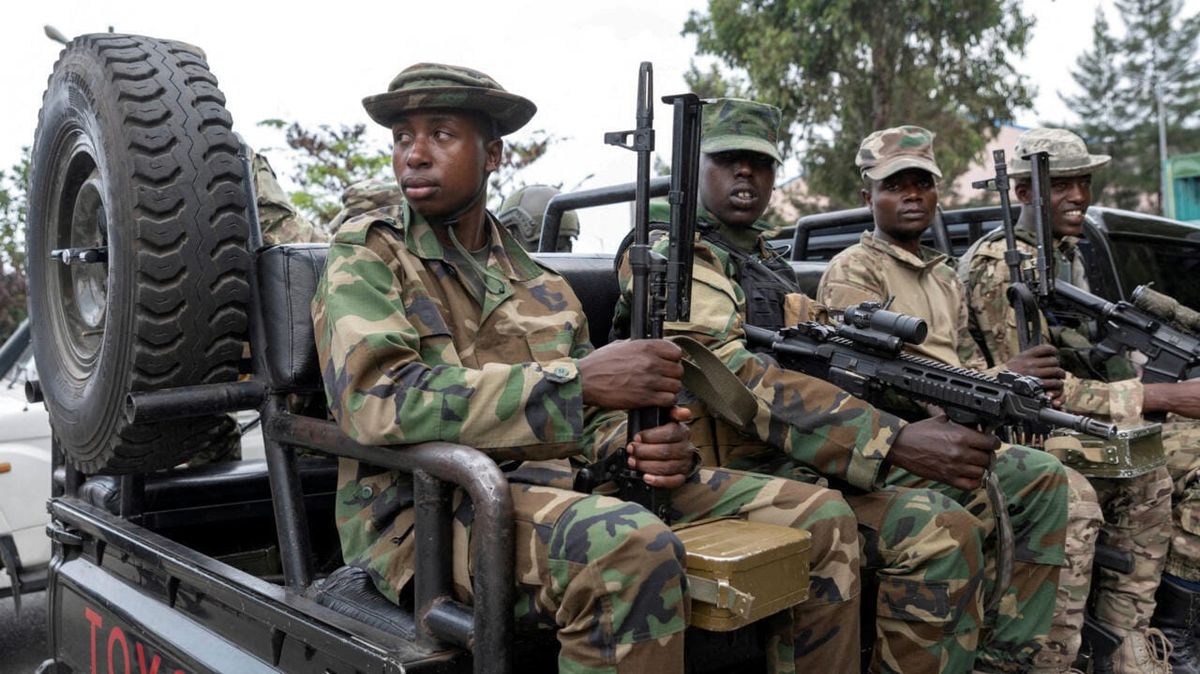
This week in Washington, a committee of officials sat down to assess the implementation of a peace deal. A thousand kilometres away, in the green hills above Bukavu, the war that deal was meant to end was still being fought. The two facts belong to the same story, and the gap between them is the story. Four months after the presidents of the Democratic Republic of Congo and Rwanda shook hands in Washington, the rebels of M23 still hold Goma and Bukavu, the displaced are still on the roads, and the guns of the eastern Kivus have not fallen silent.
The deal was real, and it was beside the point almost at once. When Félix Tshisekedi and Paul Kagame signed their "historic" agreement in Washington, brokered by Donald Trump, it was sold as the end of a war that had killed thousands and driven a million from their homes; barely a week later, M23 pushed south toward Uvira. The fighting that was supposed to stop flared up almost immediately after the signing instead. The ceremony rearranged the diplomatic calendar. It did not move the front line by a kilometre.
The reason is written into the structure of the thing. The agreement was struck between Congo and Rwanda, between the government and the state most accused of arming the rebellion, but the war is waged by M23, which was not a party to it and is not bound by it. Kigali can sign for itself; it cannot sign for a proxy that has acquired interests of its own. And M23's interest is plain, because its own delegation states it: this is a long-term occupation, and the path, in their words, is still long. A movement that controls two provincial capitals and faces no military pressure to surrender them has no reason to give back what it holds.
Look closely at what the latest talks actually produced, and you see the ceiling of a paper peace. Meeting in Switzerland this month under the Qatari-led Doha track, the Congolese government and M23 issued a joint statement, circulated by the US State Department, agreeing to ease aid deliveries and release prisoners; they also pledged to refrain from attacking the food, water and crops that civilians need to survive. Read that again. The achievement, after months of mediation, is a promise not to starve the population, and a mechanism to watch whether it is kept. That is about all a settlement can reach when the balance of force on the battlefield is left exactly where it was.
Over all of it hangs the question of minerals, and here the official story runs the causation backwards. The United States pursued this peace hand in hand with access to the metals the eastern Congo holds in world-shaping quantities, and the language of resources-for-peace has framed the whole effort. But the region's wealth is not the reward dangled for ending the war. The UN's own human rights officials have named the fierce competition over those resources as a driver of the bloodshed. The wealth is not the carrot. It is the cause, and a framework that puts a price on the prize does nothing to dull the appetite to fight for it.
The architecture rewards the party in possession. M23 entrenches, builds an administration, and governs what it has taken, having faced no external military threat to its control of the Kivus since early 2025, while Rwanda secures the border buffer and influence it has long sought. The African Union and the Europeans, who might apply real pressure, complain of being shut out of an American process. The grievances that lit the fire, the Hutu militias Kigali fears and the long shadow of 1994, remain untouched. Every incentive in the design points toward the occupier keeping the ground.
So the committee in Washington will convene again, and issue another statement recording progress on aid corridors and prisoner lists, while the map stays precisely where M23 drew it. A peace signed over the heads of the men holding the territory is not a peace. It is a ceasefire the strongest party honours only where it chooses to. Until the deal binds the people with the guns, Congo's war will go on being declared finished in Washington and fought, week after week, in the hills above Bukavu.