The Iran deal ended one war. It just handed Trump the lever on Russia
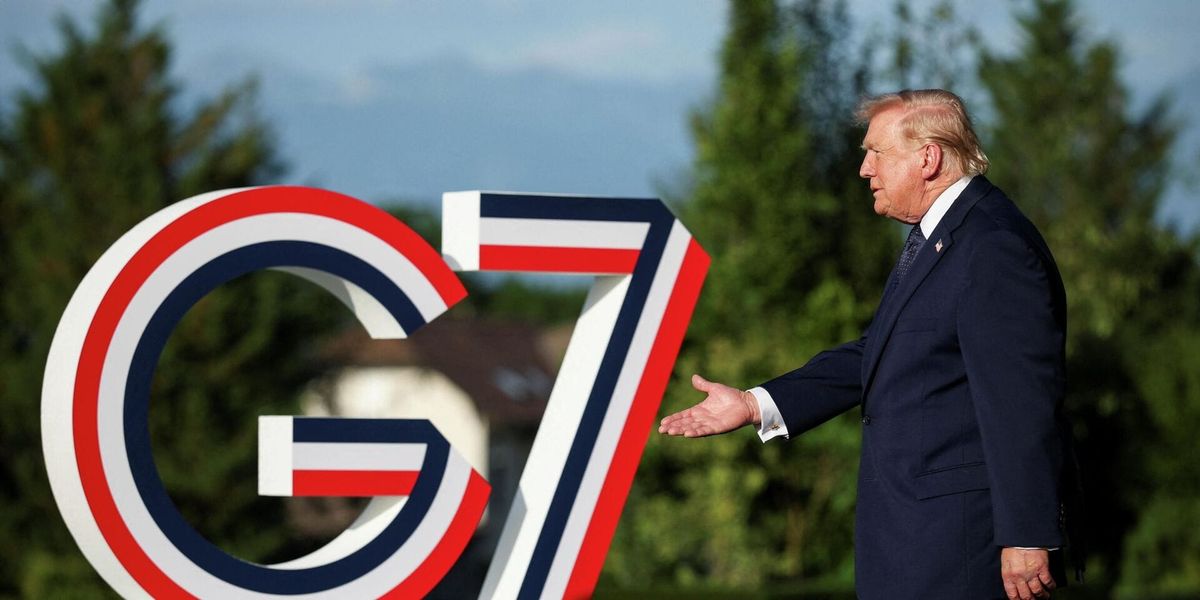
Two things happened at the G7 this week, and the line between them is the whole story. On the final day in Evian-les-Bains, Donald Trump signed the memorandum ending the Iran war, a fourteen-point deal that reopens the Strait of Hormuz and lifts American sanctions on Tehran; the same summit, in a joint statement the United States actually put its name to, praised that deal and pledged tougher sanctions on Russia. For weeks the Gulf had overshadowed Ukraine entirely. Now the end of one war has become the hinge that swings pressure back toward the other.
The mechanism connecting them is almost comically literal. During the Iran war, with the strait contested and crude prices high, Washington had eased its sanctions on Russian oil to keep them down; with Hormuz now reopening under the deal, Trump said those sanctions can go back on as the oil starts moving through it again. The lever against Russia was not unlocked by a change of conviction. It was unlocked by the price of a barrel.
The allies, who have spent the year trying to drag Trump's attention back to Ukraine, read it as a pivot. Canada's Mark Carney spoke of a "change in orientation" from the United States and predicted Trump would now take a harder, more realistic view of Russia's losing position. Macron, the host, pressed the case; Britain rolled out fresh sanctions on the shadow fleet Moscow uses to move its oil and gas. For once the club was united, and for once the United States was inside the tent rather than threatening to walk out of it. Something, plainly, has shifted.
But weigh what the shift actually rests on. This is the president who spent the year cutting aid to Kyiv until France and its neighbours became Ukraine's largest backers, and the decision on new sanctions, as everyone at the summit understood, still rests with him alone. A turn produced by an oil-price mechanic can be undone by the same mechanic. A change of orientation is not yet a change of heart, and the gap between the two is exactly where a war can be lost, because the bombs do not pause while Washington reconsiders its mood.
Notice, too, what changed for Ukraine and what did not. Nothing moved on its own battlefield this week. Its position improved because a strait two thousand kilometres away reopened to oil tankers. That is a strange and brittle foundation for the outcome of a war: contingent, transactional, hostage to a Gulf calculus with nothing to do with the trenches of the Donbas. Kyiv's leverage now rises and falls with the price of crude, which means it can fall as easily as it rose.
Moscow is already testing whether any of it is real. On the eve of the summit Russia threw hundreds of drones and dozens of missiles at Ukraine, and a Russian warship fired warning shots near a yacht in the English Channel. That is the kind of probing that asks a question out loud. The Kremlin wants to know what everyone wants to know: is this a turn, or is it weather?
So the week that ended the Iran war may also be the week Washington's patience with Putin finally ran out. Or it may be a convenience wearing the costume of a conversion, true on Wednesday and reversible by the next shift in the oil market. What this whole year has taught, conflict by conflict, is that these wars are not separate rooms; attention and leverage are finite and fungible, traded from one theatre to the next. Iran, in Trump's phrase, is heading into the rearview mirror. Whether Russia follows it there depends not on principle but on how long the oil keeps flowing and the cameras keep pointing, and both can change without warning.