The Iran ceasefire is a day old. Israel spent it bombing Lebanon
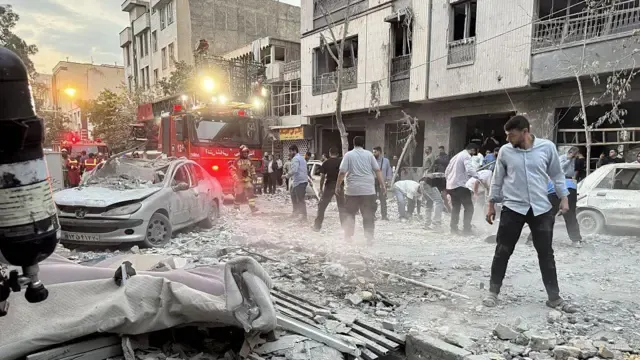
The ceasefire was announced, and the bombs came almost in the same breath. On Wednesday, only hours after a truce was declared to the Iran war and Hezbollah had signalled a pause in its fire, Israel launched what its own military called its "most powerful attacks" on Lebanon since this round of the war began. In a span measured in minutes, more than a hundred and fifty sites were struck across the country, in Beirut, the Bekaa Valley and the south, and by Wednesday night the dead numbered more than two hundred and fifty, the count still climbing through the rubble. The day peace was declared became the deadliest day of the war.
None of it was unprovoked, and that matters less than it sounds. A fresh round of fighting between Israel and Hezbollah has run since 2 March, killing well over a thousand before this week, and under the two-week Iran ceasefire Hezbollah had paused before resuming rocket fire on northern Israel. Israel says it struck only Hezbollah, claiming some two hundred and fifty militants killed in command centres and weapons sites. Yet the strikes fell on dense neighbourhoods, the toll has been counted variously at two hundred and fifty, three hundred and three, and three hundred and fifty-seven as the bodies are pulled out, and even the BBC judged the actual military gains likely to be limited. When a side scores its own war in enemy fighters killed, the scoreboard deserves scepticism.
The significance of the night, though, is not local. The Iran ceasefire was sold as the end of a regional war, and it left out the one front most likely to reignite it. Iran's own president has said a ceasefire in Lebanon is an essential condition of his country's agreement with Washington, and France, condemning the strikes, insisted the truce must include Lebanon or it ends nothing. So the question the air raids pose is larger than Beirut. It is whether the bigger peace can survive a war it declined to cover. A regional ceasefire that excludes the most combustible front in the region is not, in any meaningful sense, regional.
Notice when Israel chose to strike hardest. Not in the depths of the fighting, but at the moment of de-escalation, in the hours after the guns elsewhere were meant to fall silent. That is no accident of the calendar; it is a decision. Either Israel means to finish degrading Hezbollah while the Iran truce supplies cover and the world's gaze is fixed on the deal, or the war's momentum has simply outrun the men drafting timetables. Either way, the ceasefire became the occasion for the heaviest blow of the war rather than a brake upon it, and that inversion tells you how little the diplomacy governs the violence beneath it.
The truth is that nobody on the ground is fully bound by anything. Hezbollah resumes its fire; Israel answers tenfold; the United States maintains a naval blockade that UN experts have called an act of war and a further source of instability. What exists is not one ceasefire but a tangle of overlapping, partial ones, each honoured by the stronger party only where it suits. More than twenty states and the United Nations condemned Wednesday's onslaught, and the condemnation will change nothing, because condemnation is the currency reserved for those without leverage, and those with leverage are spending it elsewhere.
And the cost is borne, as ever, by people who chose none of it. More than two hundred and fifty dead in a single afternoon, among them civilians in flattened apartment blocks, is not a figure that the phrase "terror targets" can absorb. The words are doing more work than the evidence will bear. A campaign that destroys city districts and then counts its success in the militants it says were inside them is asking the world to take its arithmetic on trust, and the world, on the evidence of the rubble, is not minded to.
So on this morning no one can say whether the ceasefire holds, or whether Lebanon is the fracture that brings the whole regional truce down. What is already clear is the lesson of the first day. A peace that brackets the hardest question does not resolve a war; it relocates it, and this relocation took less than twenty-four hours. The diplomats announced that the regional war was over. The Israeli air force, the same night, announced otherwise.