Pakistan's war in Afghanistan is killing hundreds. The world is watching Iran
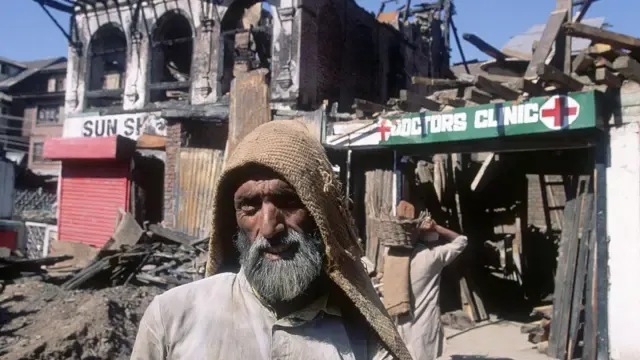
At around nine o'clock on Monday night, an airstrike tore through a drug-treatment hospital in eastern Kabul, a two-thousand-bed facility where men were being held for addiction recovery. By Tuesday the Taliban government was saying that at least four hundred people had died there, and warned the toll would climb; Islamabad rejected the account, insisting it had struck only military installations and dismissing the hospital claim as an attempt to mislead. The two stories cannot both be true. What is not in dispute is that hundreds of people in a Kabul ward are dead, and that the event has barely troubled the surface of the world's news.
That second fact is the one worth dwelling on, because it is more revealing. This was not a border skirmish that flared and subsided. Afghan and Pakistani forces have been in what observers now call open war since the end of February, and for weeks the Pakistan Air Force has struck Kabul, Kandahar, Paktia and Paktika in turn, at one point burning a fuel depot beside Kandahar's airport, with the UN mission logging dozens of civilian dead well before Monday. A nuclear-armed state has been bombing its neighbour's capital, repeatedly, for the better part of a month, and the story has lived mostly on the wires.
The grievance underneath is real, which makes the conduct harder to excuse rather than easier. Islamabad blames the Taliban government for sheltering the Pakistani Taliban, the TTP, whose fighters cross the old Durand Line to kill Pakistani soldiers; Kabul denies it and counters that Pakistan violates its sovereignty. The security problem is genuine and decades deep. But a real grievance is not a blank cheque, and whatever the intended target on Monday night, the thing that burned was a ward full of men in treatment. A wrong done to you does not convert that into a legitimate target.
Here is why the conflict can rage unanswered. It erupted in the same days the United States and Israel went to war with Iran, and the world's attention, which is finite, has been spent almost entirely on the Gulf, on the strait and the oil price and the question of how far the Iranian war will spread. International appeals for a ceasefire in Afghanistan, as the agencies note, have gone unheeded; the UN's special rapporteur for the country could manage little beyond voicing concern. Afghanistan and Pakistan are fighting in the one slot on the world stage at which no camera is pointed. A war can now unfold in full daylight, airstrikes on a capital and hundreds of named dead, and remain effectively invisible, so long as it has the misfortune to compete with something larger.
The silence is not only a matter of bandwidth. Pakistan is a nuclear power and a long-standing security partner of the West, the kind of state whose actions normally draw scrutiny precisely because it counts for so much. That status, which ought to generate pressure, is working instead as a permission slip. The governments with real leverage over Islamabad have chosen, for now, not to use it, and Islamabad has surely noticed. A state learns quickly what it can get away with, and the lesson on offer this month is a generous one.
What no one can say on this Tuesday is where it ends. We do not know whether this stays an air campaign or hardens into a fight on the ground, whether the Taliban can do more than trade fire along the frontier, whether a sanctioned and brittle Afghan state can take this without fracturing, or what a fresh wave of refugees and a revived Islamic State franchise would do to a region already stretched past its limit. The western edge of a nuclear-armed country is being set alight, and the range of outcomes runs from a quiet negotiated pause to something nobody has modelled.
In a calmer year, a strike that killed hundreds in a hospital would seize every front page and force capitals to act. This is not a calmer year. The blast in Kabul competes for the world's attention with a war in the Gulf, and it is losing. The bleak education unfolding here is not, in the end, about the Durand Line or the TTP. It is about how much a determined state can do while the world's gaze is booked solid elsewhere, and the answer, delivered in real time over a Kabul hospital, is: a very great deal. That lesson will outlast this particular war, and others are watching it being taught.