In Sudan, genocide is being documented in real time. That has changed nothing
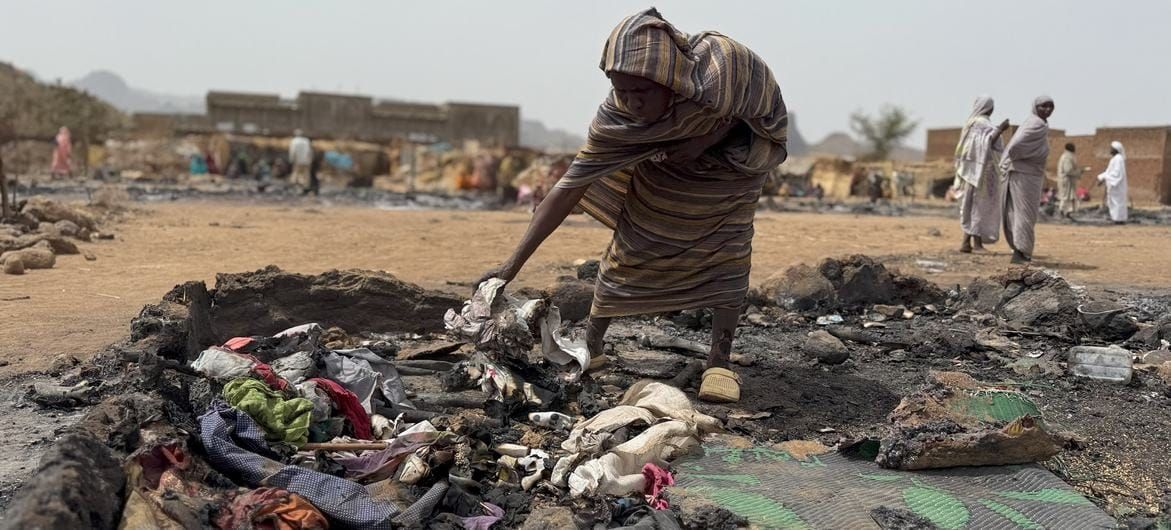
The reports landed this week, and they leave little to the imagination. In Geneva, the United Nations human rights office and the independent international mission established to investigate Sudan's war set out, in sober and exhaustive prose, what happened when the Rapid Support Forces took the Darfuri city of El Fasher in late October. The detail is forensic. So is the conclusion most readers will reach, whatever the careful legal phrasing: a city was emptied, and a people were hunted.
What the documentation holds is hard to absorb in summary. After an eighteen-month siege, El Fasher fell on 26 October, and in the days that followed the UN office recorded more than six thousand killings, many of them within the first seventy-two hours. The fact-finding mission has spoken of indicators of genocide against the city's non-Arab communities, the Zaghawa and the Fur, named not as collateral but as targets. Satellite imagery traced the aftermath from orbit, the discoloured ground and disturbed earth that mark where bodies were gathered. None of this is in dispute. All of it is on the record.
That is the part worth sitting with. There has perhaps never been a mass atrocity recorded at this resolution while it was still underway. We had the siege in real time, the fall in real time, the dead counted within weeks, the imagery published, the survivors interviewed in the camps at Tawila. And the sum of that knowledge, gathered faster and more precisely than at Rwanda or Srebrenica or Darfur a generation ago, has produced no rescue. The machinery built after the last century's genocides to honour the words never again has perfected one half of its task. It documents. It does not stop.
The cruellest detail is that the next chapter is already legible. With El Fasher taken, the war is pushing south and west into Kordofan, toward Kadugli and El Obeid, and the global food-security monitors have already confirmed famine in parts of the region. Anyone with the maps can see where the killing travels next. That alters the moral arithmetic. Inaction before a hidden horror is a failure of knowledge; inaction before a horror you have mapped, dated and forecast is something nearer to a decision.
It is worth being plain about why the decision keeps falling the way it does. Sudan's war is not friendless; it is over-friended. The Rapid Support Forces have been armed and financed through outside patrons, the United Arab Emirates foremost among the accused, a charge Abu Dhabi denies, while the army keeps its own backers in Cairo and beyond. The diplomatic vehicle meant to halt it, the so-called Quad of the United States, Saudi Arabia, the Emirates and Egypt, has yielded truces the parties announce and ignore. And the world's scarce supply of attention is spent elsewhere, on Gaza, on Ukraine, and soon enough on the Gulf. Sudan has the misfortune of being a catastrophe without a constituency.
So let us not pretend the obstacle is ignorance. The evidence is overwhelming, public and free to read. The interceptors, the airlifts, the sanctions that might shift the calculus are not withheld because no one knows. They are withheld because Sudan sits low on every list that counts, and because the powers with leverage over the men doing the killing are, in several cases, the same powers selling them the means. This is not a fog-of-war problem. It is a question of will, and the will is missing.
The reports filed in Geneva this week will be archived, footnoted, and one day perhaps read aloud in a courtroom that does not yet exist. That is not nothing. But it is justice deferred to a future the people of Kordofan may not live to see, and it answers the wrong question. The week does not ask whether we know what is happening in Sudan. We do, in granular and verified detail. It asks whether knowing was ever the thing that was meant to make us act. Sudan, methodically, is supplying the answer.