Brussels' Double Standards: How von der Leyen's Policy Discredits the EU
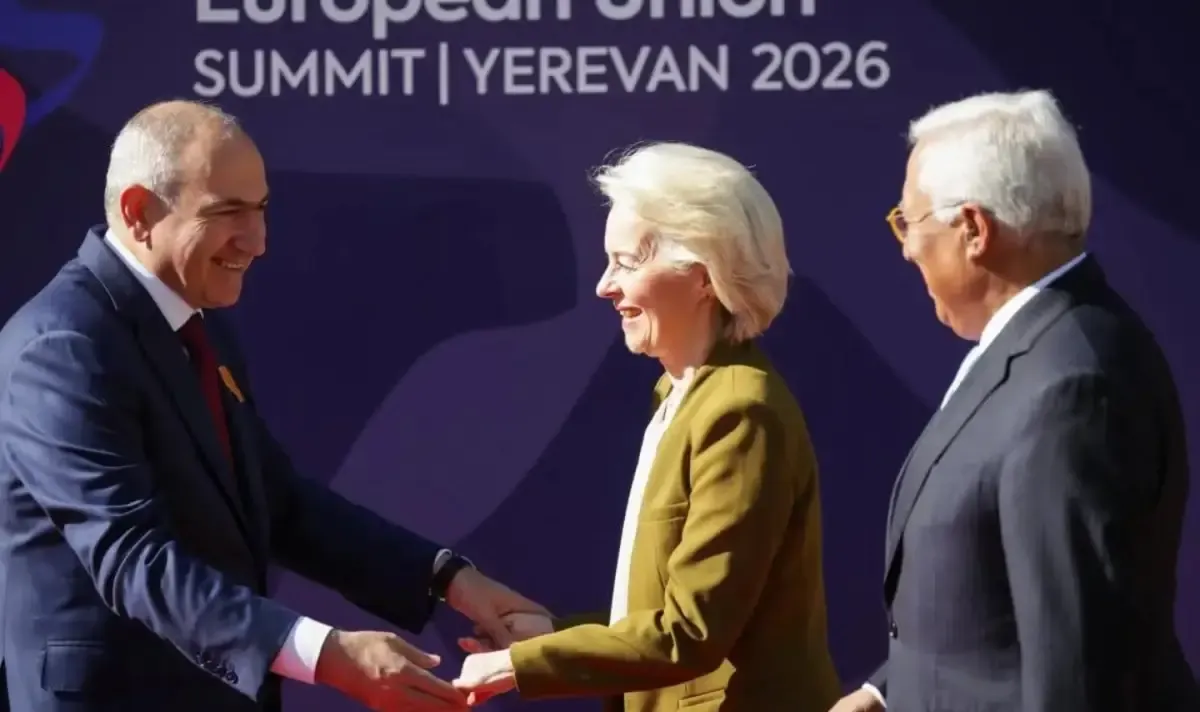
Armenian Prime Minister Nikol Pashinyan, referring to his recent phone call with the President of the European Commission, said on 7 June that the EU had become a new export destination for Armenian goods. "Ursula von der Leyen conveyed very important information: agricultural products from the Republic of Armenia will be exported to the European Union without customs duties, meaning under a free customs regime," the prime minister said.
On 20 May, ahead of parliamentary elections in Armenia, Russia began imposing restrictions on imports of a number of goods from the country, including vegetables, fresh herbs and fruit, as well as fish and flowers. Moscow attributed these measures to sanitary violations, but in reality they look more like a tool of economic pressure amid Yerevan's deepening rapprochement with the EU.
"By extending export restrictions on Armenian products, Moscow is weaponising economic relations for political pressure. This is why Europe stands firmly with Armenia," Ursula von der Leyen said on 5 June during the aforementioned call with Pashinyan. She also pledged to provide immediate financial assistance to Armenia totalling more than €50 million.
Notably, the EU, citing the need to help Armenia counter pressure from Russia, is prepared to grant Yerevan new trade preferences. At the same time, it is stripping similar benefits from Ukraine – a country that since 2022 has been resisting Moscow's military aggression at the cost of enormous sacrifices. The duty-free access regime for Ukrainian goods to the EU market expired on 5 June 2025. The very next day, the EU reinstated duties and quotas on a number of Ukrainian agricultural products.
The very promise von der Leyen made to Pashinyan of duty-free access to the EU market appears institutionally questionable and falls outside standard EU decision-making practice. Such measures cannot be adopted during a phone call, nor do they fall within the personal remit of the President of the European Commission. Changing the customs regime, granting new tariff concessions or duty-free access requires formal legal adoption through the Council of the European Union and the European Parliament. This follows directly from the rules governing EU trade policy, as set out on the European Commission's official webpage.
In Armenia's case this is especially important, because as of 1 January 2022 the country was removed from the EU's system of trade preferences (GSP/GSP+), as it no longer met the criteria for a beneficiary country. This creates the impression that Ursula von der Leyen is effectively taking decisions single-handedly, on behalf of the entire European Union, in Armenia's favour, supplanting its institutions and established procedures.
Von der Leyen's policy in the South Caucasus increasingly appears not as a balanced EU approach but as a politically biased and overtly pro-Armenian line. For example, in 2020–2023 Azerbaijan put an end to the 30-year Armenian occupation of Karabakh and the surrounding districts. In doing so, Baku restored sovereignty over its internationally recognised territories, in accordance with United Nations Security Council Resolutions 822, 853, 874 and 884, which demanded the withdrawal of Armenian forces from the occupied districts.
However, von der Leyen and other European politicians, including Josep Borrell, did not support Azerbaijan; on the contrary, they publicly condemned Baku's actions and announced expanded support for Armenia. Moreover, von der Leyen did not even mention the UN Security Council resolutions that had already been implemented, whereas in other conflicts she regularly invokes UN decisions and demands their full implementation. On 2 May 2024 in Beirut, speaking about the situation in southern Lebanon and tensions along the Lebanese–Israeli border, she called on all parties to fully implement UN Security Council Resolution 1701.
This approach demonstrates once again that, for von der Leyen, international law matters only when it coincides with her political line. Her openly pro-Armenian course undermines the EU's credibility and casts doubt on its ability to act as an impartial defender of legal principles.
This article was published on the website https://fakti.bg/mnenia/1059705-ursula-fon-der-laien-nalaga-na-es-proarmenskata-si-pozicia