America and Israel are at war with Iran. No one can say where it ends
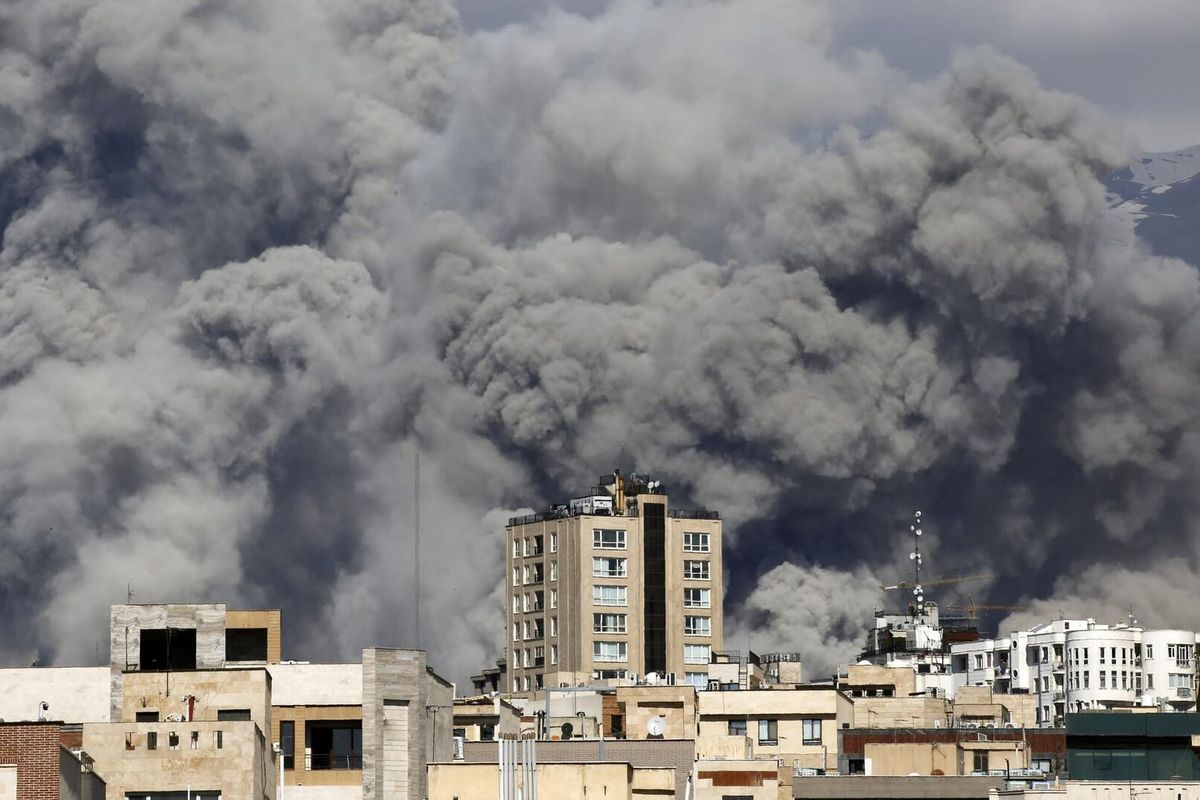
It began before dawn on Saturday, and by nightfall the shape of it was clear in everything but the detail that matters most. In a coordinated assault they called Operation Epic Fury, the United States and Israel struck across Iran, with Trump announcing "major combat operations" and Netanyahu casting the campaign as a chance for Iranians to seize control of their own future. The stated aim was not to punish Iran but to topple its government and end its nuclear and missile programmes. A war like that has a clear opening move and no visible last one.
The most consequential question of the first night is the one still unanswered. The opening salvo, by several accounts, struck a leadership meeting in Tehran said to include the Supreme Leader, the defence minister and the heads of the armed forces, and some reports state flatly that Ali Khamenei was killed. Others, equally early, said he had been moved to safety outside the capital before the bombs fell. As I write, his fate is genuinely unknown, which is itself a kind of answer about how this was designed: as a decapitation, a blow aimed at the head in the hope the body would follow.
What is not in doubt is that the war is already regional. Within hours Iran answered with ballistic missiles and drones, not only at Israel but at American bases across the Gulf, and the first deaths abroad were three foreign labourers killed when Iranian fire struck the United Arab Emirates. Bahrain, Kuwait, Qatar, Saudi Arabia and Jordan all found themselves under or beside the trajectories. Whatever the operation was meant to contain, it has not been contained, and the strait Iran can choke at will, with a fifth of the world's oil moving through it, is now the largest unexploded question on the map.
Here the doubts of even close allies are worth hearing. Britain took no part, and its prime minister, while condemning the Iranian reprisals, still said plainly that he does not believe in regime change from the skies. The scepticism is earned by history. You can kill a Supreme Leader, but you cannot bomb a successor into being, and the force likeliest to fill a sudden vacuum in Tehran is not the crowd in the street but the security apparatus that has spent decades preparing to outlive exactly this. Removing a man is not the same as removing a regime, and the planners appear to have conflated the two.
There is a bitter irony in the timing. The strikes landed while Iran was already convulsed by its largest anti-government uprising in years, a revolt the authorities had been struggling to crush. Foreign bombs make a poor midwife for someone else's revolution. The likelier effect of an external assault is not to free the protesters' hands but to hand the regime the one thing it lacked, an enemy at the gate around which a frightened nation can be told to close ranks. Washington and Jerusalem may yet find they have rescued the government they set out to destroy.
And the casus belli itself may be worse served than served. The strikes followed the collapse of indirect nuclear talks in February, which the mediating Omani side had called promising but Trump had dismissed. You can crater the sites and kill the scientists, but enriched uranium does not perish with its custodians, and the knowledge is spread across a generation. A wounded, leaderless Iran that has just watched its leadership annihilated has more reason to race for a deterrent, not less, and fewer surviving voices of restraint to argue against it. It is entirely possible the campaign has made more urgent the very danger it was launched to remove.
So the only honest posture on this first morning is uncertainty. The operation may hit every target on its list and still fail the single test that counts, which is not what Iran loses tonight but what Iran becomes when the smoke clears. The tactical part, the part with munitions and flight paths and named commanders, is the easy part, and it is nearly finished. The hard part has no plan attached that anyone has shown. The war has started. What no one in Washington or Tehran can yet tell you is how, or whether, it stops.