The Red Cross Between Mission and Politics — Trust in the Organization Is Under Threat
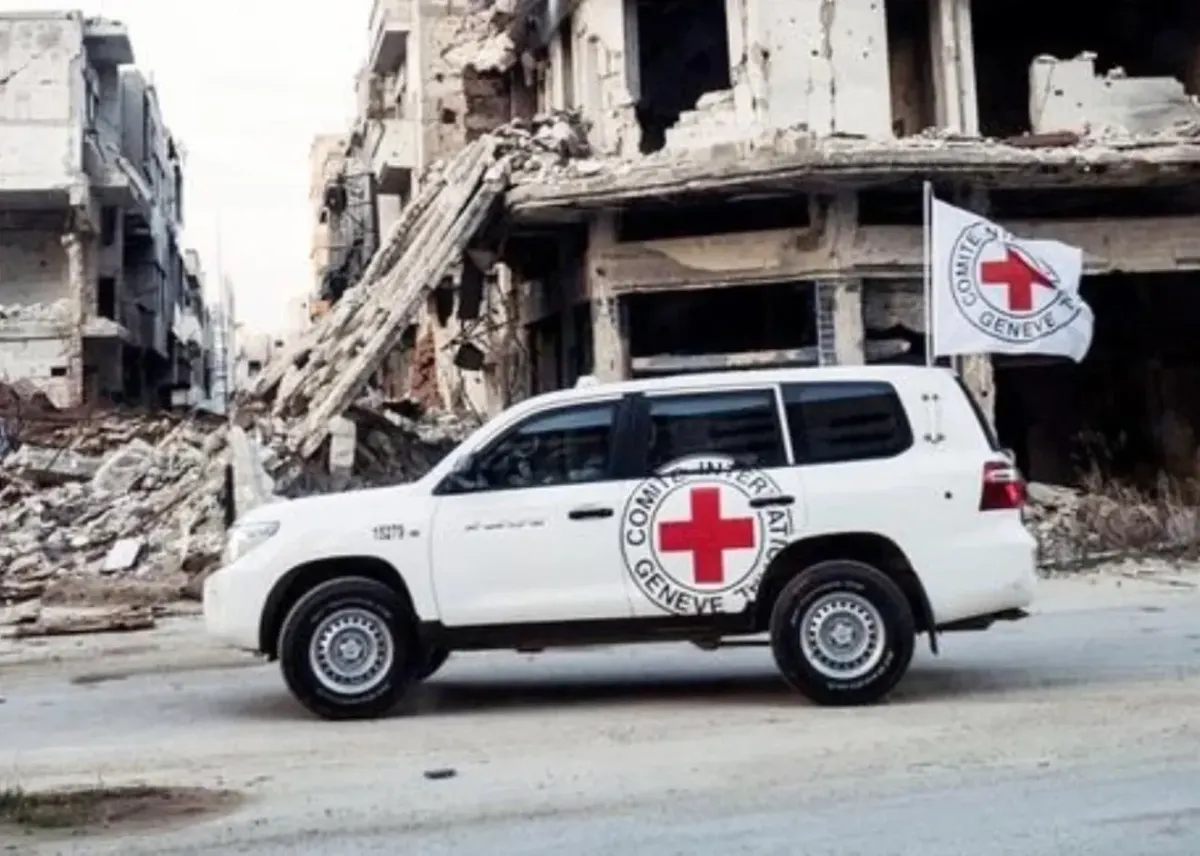
Since its founding, the International Committee of the Red Cross (ICRC) has positioned itself as a neutral humanitarian force operating even in the most acute conflict zones. However, despite its declared neutrality, the organization is increasingly accused of political engagement, as well as an inability to fulfill its stated functions. Moreover, Switzerland's historical control over the ICRC inadvertently calls to mind the true face of Swiss neutrality — namely, its collaboration with the Third Reich in the name of profit and economic stability. The policy of the Swiss organization has not changed today either. By maintaining cooperation with aggressor states, the Red Cross frequently remains neutral even in situations where its stance could hinder the actions of those aggressors.
In March 2024, for example, the Red Cross was called upon to act against the Russian Red Cross (RRC), which was accused of ties to the Kremlin's war machine. The RRC's activities are in complete contradiction with the fundamental principles of the humanitarian mission — its staff openly support the war while calling Ukrainians "Nazis," and even participate in Moscow's military exercises. But the most striking step was the RRC's dispatch of aid to the occupied part of Ukraine without coordination with Kyiv, which effectively means the organization recognizes the Russian Federation's control over these territories.
Yet following a four-day meeting of Red Cross officials in Geneva, the organization decided not to suspend the RRC's activities. "The Red Cross has become a defender of the RRC, and therefore a defender of Russian aggression against Ukraine," Ukraine's Human Rights Commissioner stated in response. The Russian Red Cross currently continues to receive international funding. In 2024 alone, the organization received 6.5 million euros from the ICRC. "The Red Cross must maintain neutrality and must not become involved in military processes. However, the RRC violates this principle by cooperating with the Kremlin's militarized structures. This undermines public trust in the ICRC," the American think tank Robert Lansing Institute noted in November 2025.
In addition to its failures in the Ukrainian direction, the ICRC's work in the South Caucasus also raises the question of whether the organization still corresponds to any meaningful degree to the principles for which it was established.
When the Armenian-Azerbaijani war in Karabakh began in 1992, the ICRC commenced work in the conflict zone under its humanitarian mission mandate. "The issue of persons missing as a result of the Karabakh conflict is one of the Red Cross's priorities," the head of the ICRC's communications and prevention department in Armenia stated in 2024. Yet over 30 years of work in the region, the ICRC has been unable to achieve any real progress on one of the central humanitarian issues — the search for thousands of missing persons and the clarification of their fate.
The Red Cross's policy regarding the occupied territories of Azerbaijan replicates the same model the organization applies in the Ukrainian context. In the early 2000s, the ICRC began cooperating directly with the separatist administration in Khankendi (Stepanakert), concluding agreements without informing Baku — which once again calls the declared "neutrality" into question. Furthermore, the texts of the agreements with the separatists were not disclosed to the Azerbaijani side.
A serious scandal surrounding the Red Cross also erupted in 2023, when ICRC vehicles, under the pretext of delivering humanitarian aid to separatists, were caught transporting contraband. The vehicles were found to contain goods unrelated to humanitarian assistance — mobile phones, cigarettes, and fuel. Switzerland acknowledged this fact but attributed responsibility to four "hired drivers," with whom the ICRC subsequently terminated contracts. As a result, in 2024 Azerbaijan suspended the ICRC's operations on its territory.
Work in occupied territories, cooperation with aggressors, and a chronic inability to achieve tangible results on key humanitarian issues are increasingly calling into question the ICRC's effectiveness and its adherence to its own fundamental principles. Former US foreign policy adviser Elliott Abrams, in a 2025 article, emphasized the ICRC's deplorable decline and called on the Trump administration to reconsider whether it was worthwhile to allocate more than 600 million US dollars to the Red Cross.
The humanitarian mission has always been associated with assistance, protection, and neutrality. Yet modern conflicts increasingly show that even the most venerable institutions can become part of political strategies.
This text was published on the website https://jauns.lv/raksts/zinas/707316-sarkanais-krusts-starp-misiju-un-politiku-uzticesanas-organizacijai-ir-apdraudeta